
Turkey Tail
Historically referred to as "Yun Zhi," or "Cloud Mushroom," Turkey Tail has been valued in Asian culture for over 2,000 years as one of the most widely used medicinal fungi in traditional Chinese medicine. Its name comes from the fan-shaped, concentrically banded cap that fans out in bands of brown, tan, and blue-gray, resembling the tail feathers of a wild turkey. Its Chinese name, Yun Zhi, reflects the cloud-like, layered pattern of its cap.
Purchase Organic Turkey Tail Double Extract Grown in the USA Here!
Turkey Tail's documented use in Chinese medical texts dates back to at least the Ming Dynasty, where it was consolidated into formulas to strengthen the body and treat chronic lung conditions. In Japan, where it is known as Kawaratake or "roof tile mushroom," compounds isolated from Turkey Tail were developed into one of the first mushroom-derived adjuvant cancer therapies, approved for clinical use in 1977. Because of this deep dual history in both traditional and modern medicine, Turkey Tail remains one of the most heavily researched functional mushrooms in the world.
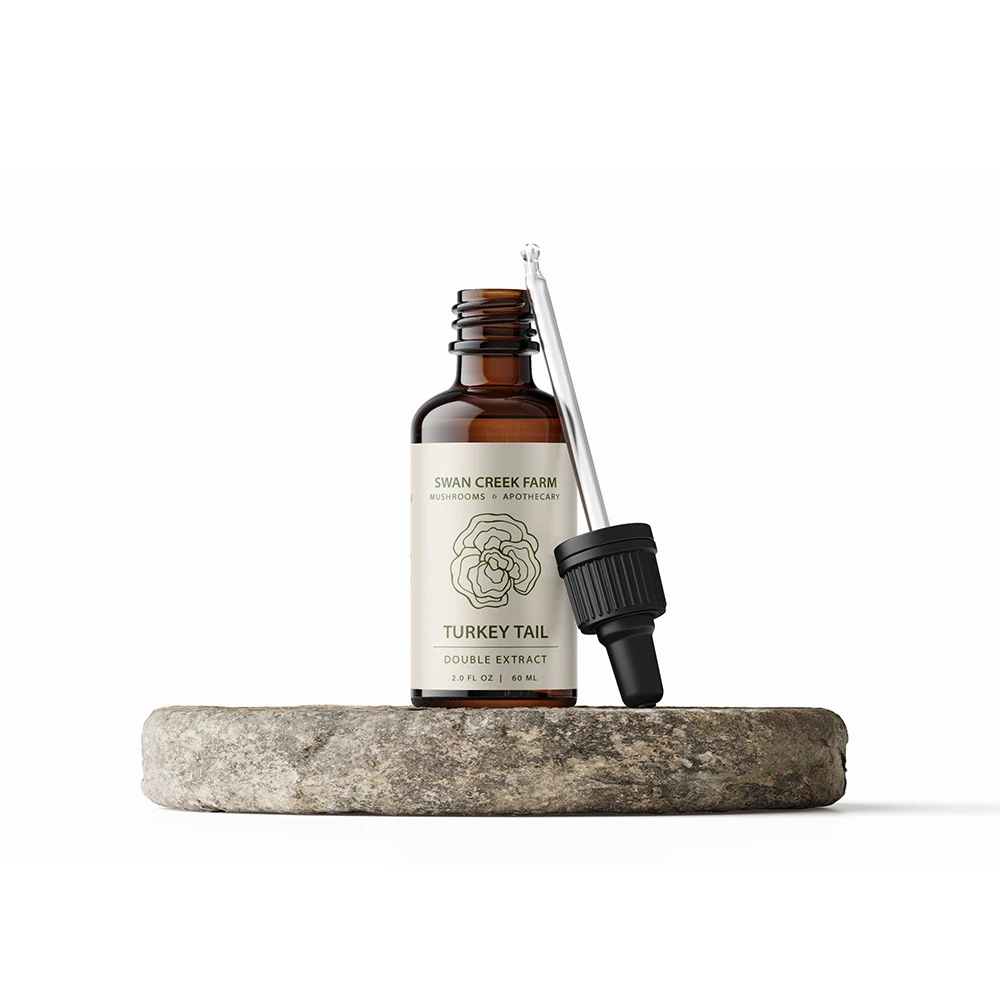

Common Name: Turkey Tail
Pinyin Name: Yun Zhi
Botanical Name: Trametes versicolor (formerly Coriolus versicolor)
Part Used: Fruiting body, mycelium
Properties: Sweet, slightly bitter, neutral
Channels Entered: Lung, Spleen, Liver
Chinese Medicine Primary Actions of Turkey Tail:
- Clears Damp-Heat and toxins from the body
- Tonifies Lung Qi and calms cough
- Strengthens the Spleen and resolves dampness
- Supports Wei Qi, the body's protective immune function
- Benefits the digestive system and gut microbiome
Chinese Medicine Patterns of Imbalance Addressed with Turkey Tail
Lung
Turkey Tail has long been used to support Lung health, particularly in cases of chronic cough, wheezing, and respiratory weakness. Its slightly bitter nature directs Qi downward, helping to calm rebellious Lung Qi and clear phlegm associated with lingering respiratory conditions.
Spleen
As a Spleen Qi tonic, Turkey Tail invigorates digestion and helps resolve dampness, a pattern often seen as loose stools, poor appetite, and fatigue. Regular use supports healthy digestion and helps rebuild strength during chronic illness or recovery.
Liver
Turkey Tail helps clear Damp-Heat that can settle in the Liver system, supporting the body's natural detoxification processes and easing the stagnation that often accompanies chronic inflammatory conditions.
Wei Qi
Like other functional mushrooms, Turkey Tail is prized for benefiting the immune function of the body, helping to fortify Wei Qi against invasion by external pathogens.
Turkey Tail Active Chemical Constituents
Turkey Tail owes much of its therapeutic reputation to protein-bound polysaccharides found in its fruiting body and mycelium. These compounds are large molecules that require proper hot-water or dual extraction to become bioavailable; consuming raw or simply dried, powdered mushroom material provides only minimal benefit, since the tough, chitinous cell walls of the fungus resist digestion unless broken down through extraction.
Polysaccharide-K (PSK)
PSK, also known as Krestin, is one of the most extensively studied mushroom compounds in the world. Isolated from Turkey Tail mycelium in Japan, it was approved in 1977 as an adjuvant therapy used alongside surgery, chemotherapy, and radiotherapy. PSK is best known for its ability to support T-cell activity and natural killer (NK) cell function as part of the body's immune response.
Polysaccharide-Peptide (PSP)
Similar in structure to PSK but isolated from a different strain of Turkey Tail, PSP has been shown to enhance T-cell proliferation and NK cell activity. Research has also explored its supportive role in immune recovery following radiotherapy, where it has been associated with faster lymphocyte recovery.
Beta-Glucans
Beta-glucan polysaccharides are a major structural component of Turkey Tail's cell walls and are largely responsible for its immune-modulating, antioxidant, and hypolipidemic effects. These compounds interact with receptors on immune cells, helping to regulate and strengthen the body's natural defenses.
Phenolic Compounds
Turkey Tail contains a range of phenolic compounds that contribute to its antioxidant capacity, helping to scavenge free radicals and reduce oxidative stress throughout the body.
Novel Compounds
Ongoing research continues to identify additional bioactive constituents in Turkey Tail, including triterpenoids and sterols, which contribute to its antimicrobial, hepatoprotective, and anti-inflammatory effects. As with many functional mushrooms, there remains much still to be discovered about the full range of compounds this fungus produces.
Western Medicine Benefits of Turkey Tail Mushroom
Immune System Support
Turkey Tail is best known for its immune-modulating properties, largely attributed to its polysaccharopeptides PSK and PSP. These compounds support the activity of T-cells and natural killer cells, helping the immune system recognize and respond to abnormal or invading cells.
Integrative Oncology Support
Turkey Tail has been used for decades in Japan as an adjuvant alongside conventional cancer treatments such as chemotherapy and radiotherapy. Clinical research suggests that PSK may help support immune parameters and improve outcomes when used alongside standard care for certain cancers, including gastric, colorectal, and lung cancer.
Gut Microbiome Support
Turkey Tail acts as a prebiotic, helping to beneficially shift the composition of gut bacteria. This supports overall digestive health and reinforces the immune function that is closely tied to a healthy gut environment.
Antioxidant Effects
The phenolic compounds and polysaccharides in Turkey Tail help neutralize free radicals, reducing oxidative stress that contributes to cellular aging and chronic disease.
Antimicrobial and Antiviral Activity
Laboratory studies suggest that Turkey Tail extracts exhibit antibacterial, antifungal, and antiviral properties, supporting its traditional use in fighting infection and strengthening resistance to illness.
Anti-Inflammatory Support
Turkey Tail's bioactive compounds help modulate the body's inflammatory response, which may benefit individuals dealing with chronic inflammatory conditions.
Liver Health
Research indicates Turkey Tail has hepatoprotective properties, helping to support healthy liver function and protect liver cells from oxidative damage.
Blood Sugar Support
Preliminary research suggests Turkey Tail may help support healthy blood sugar metabolism, contributing to its traditional use as a tonic in chronic conditions.
Growing & Harvesting Turkey Tail
Turkey Tail grows abundantly in the wild on dead logs and stumps of hardwood trees around the world, identifiable by its thin, leathery, fan-shaped caps banded in shades of brown, tan, and blue-gray. It can also be cultivated on hardwood substrates, making it widely available for sustainable harvesting.
Turkey Tail Culinary Uses
Unlike some other functional mushrooms, Turkey Tail is too tough and woody in texture to be eaten as a food. Traditionally, it has instead been simmered into teas and decoctions, allowing its beneficial compounds to be extracted into a drinkable form, or prepared as a modern extract for convenient daily use.
Contraindications: None widely reported; however, as an immune-modulating mushroom, individuals on immunosuppressive therapy should consult a healthcare provider before use.
References:
Hobbs C. Medicinal mushrooms: An exploration of tradition, healing, and culture. Summertown, TN: Botanica Press; 2002.
Kidd P.M. The use of mushroom glucans and proteoglycans in cancer treatment. Alternative Medicine Review. 2000;5(1):4-27.
Ng T.B. A review of research on the protein-bound polysaccharide (polysaccharopeptide, PSP) from the mushroom Coriolus versicolor (Basidiomycetes: Polyporaceae). General Pharmacology. 1998;30(1):1-4.
Standish L.J., Wenner C.A., Sweet E.S., et al. Trametes versicolor mushroom immune therapy in breast cancer. Journal of the Society for Integrative Oncology. 2008;6(3):122-128.
Torkelson C.J., Sweet E., Martzen M.R., et al. Phase 1 clinical trial of Trametes versicolor in women with breast cancer. ISRN Oncology. 2012;2012:251632. doi: 10.5402/2012/251632.
Cui J., Chisti Y. Polysaccharopeptides of Coriolus versicolor: physiological activity, uses, and production. Biotechnology Advances. 2003;21(2):109-122. doi: 10.1016/S0734-9750(03)00002-8.
Pallav K., Dowd S.E., Villafuerte J., et al. Effects of polysaccharopeptide from Trametes versicolor and amoxicillin on the gut microbiome of healthy volunteers: a randomized clinical trial. Gut Microbes. 2014;5(4):458-467. doi: 10.4161/gmic.29558.
This information has not been evaluated by the Food and Drug Administration. This information is not intended to diagnose, treat, cure, or prevent any disease.